What am I looking at?
Visual recognition
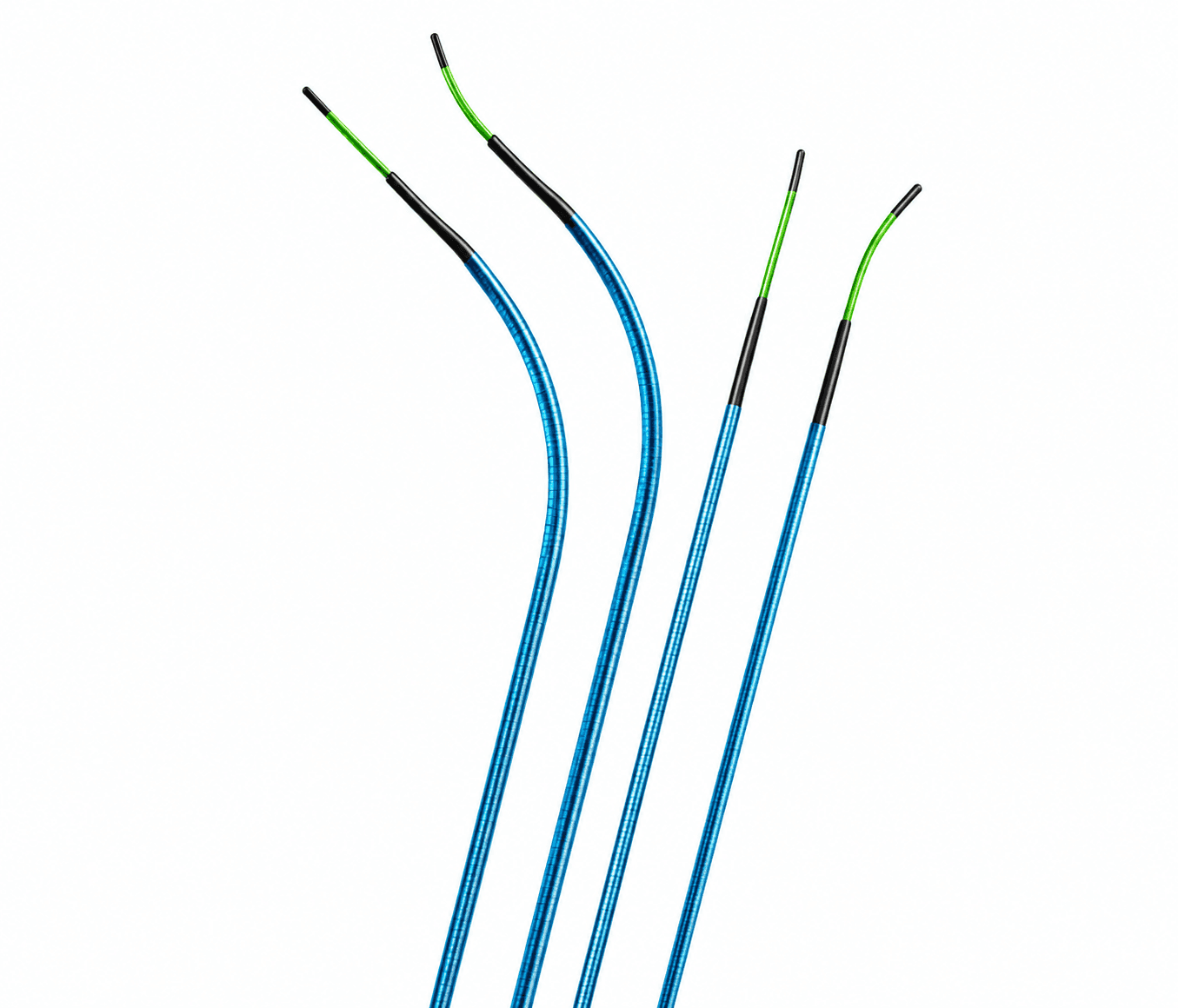
Thin, kink-resistant catheter compatible with 0.014- to 0.035-inch guidewires, with a tapered, often hydrophilic tip, tracked over the working wire.
05-04
Low-profile support catheter
Three-panel learning framework
What am I looking at?
Thin, kink-resistant catheter compatible with 0.014- to 0.035-inch guidewires, with a tapered, often hydrophilic tip, tracked over the working wire.
What does it do, and where will I see it?
Low-profile support catheter advanced over a guidewire to add pushability, protect the wire, and help cross tight, calcified, or chronically occluded segments. Typical procedural contexts include peripheral chronic total occlusions, tortuous or calcified lesions, and difficult wire crossings.
What most clearly distinguishes it from similar devices?
A crossing support catheter adds pushability and wire support across difficult lesions while also permitting wire exchange or selective injection, unlike a microcatheter used primarily for distal embolic delivery.