IR Table
A VISUAL GUIDE TO INTERVENTIONAL
RADIOLOGY DEVICES AND EQUIPMENT
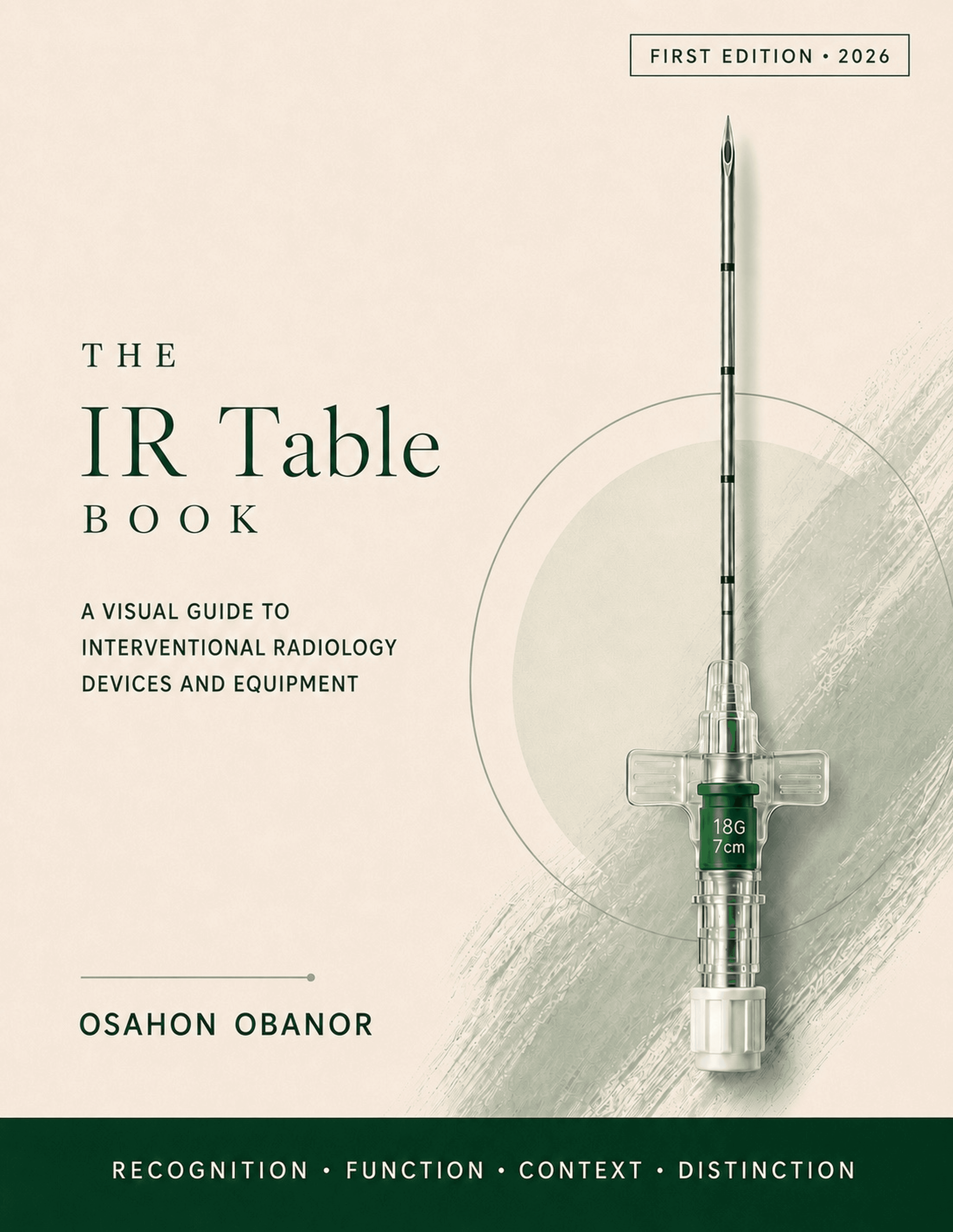
Front cover selected, 1 of 2
The Taxonomy
18 sections, organized by device family.
Access
9 Devices02Wires
9 Devices03Sheaths & Dilators
7 Devices04Diagnostic Catheters
16 Devices05Microcatheters, Microwires & Crossing Systems
6 Devices06Contrast & Table Setup
9 Devices07Embolics
13 Devices08Balloons
9 Devices09Stents & Stent Grafts
8 Devices10Thrombectomy & Lysis
7 Devices11Embolic Protection, Retrieval & IVC Filters
7 Devices12Drains & Enteral Access
9 Devices13Biliary & Genitourinary
16 Devices14Central Venous Access
9 Devices15Image-Guided Biopsy, Ablation & Augmentation
12 Devices16AV Dialysis Access
5 Devices17TIPS & Portal Hypertension
4 Devices18Closure, Hemostasis & Securement
16 DevicesView All Sections
Explore all 18 sections, sequenced from foundational devices to specialized systems.
Continue through 12 more sections in the complete procedural taxonomy.
ViewA Guide Built for Learning
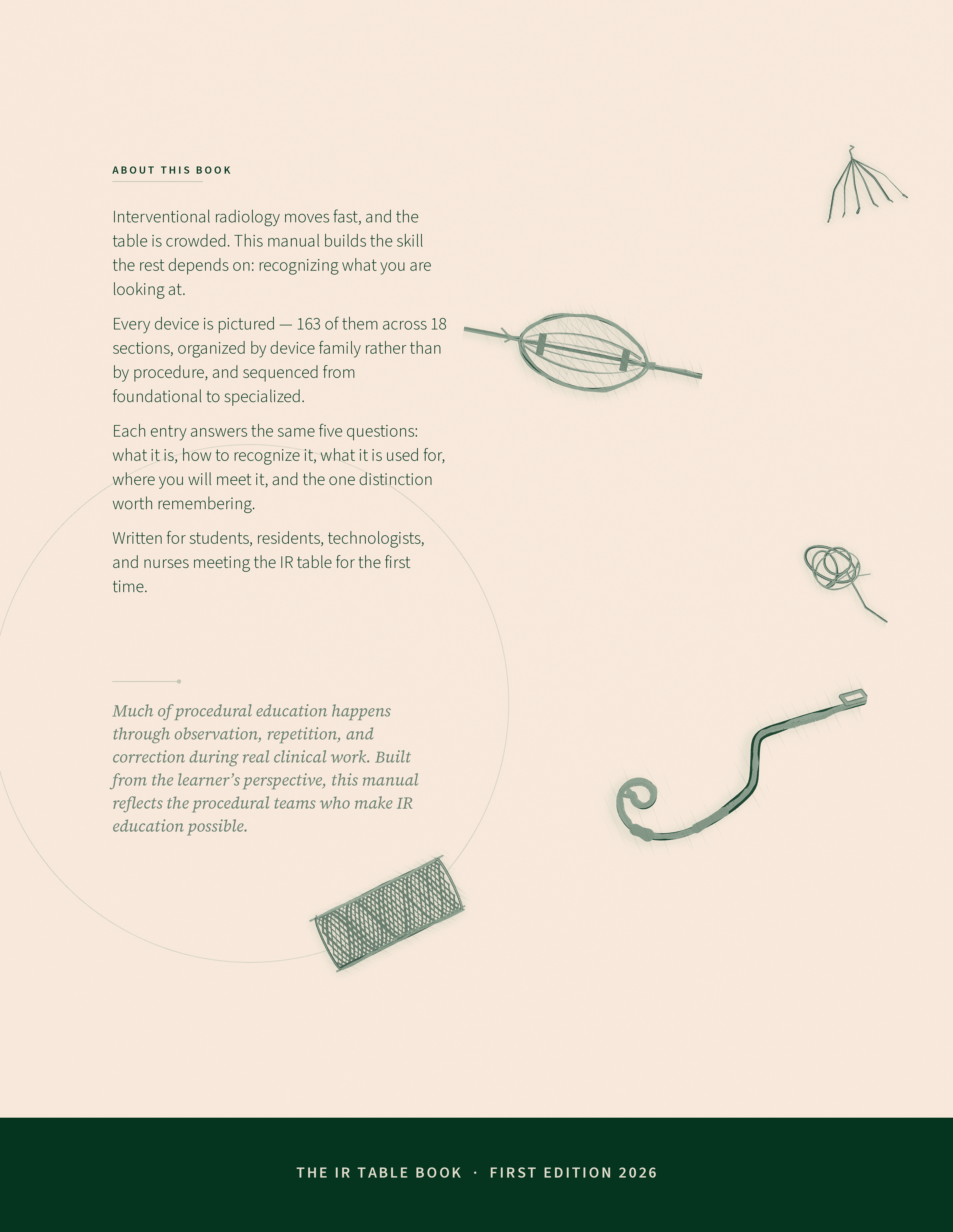
Built from the learner's perspective, the manual develops recognition through observation, repetition, and correction during real clinical work.
Every device is pictured and organized around the same five questions, helping students, residents, technologists, and nurses meet the IR table for the first time.
For educational use only. This library is designed to assist learners in recognizing visual signatures and procedural roles. It is not a substitute for device instructions for use, institutional policy, or clinical judgment.