Anchor the observation
Begin with what is actually visible: profile, tip, hub, connection, packaging. Specific details give memory—and conversation—a reliable foothold.
About the project Field guide, first edition
A visual guide to the devices, equipment, and visual language of interventional radiology. Clear imagery and practical context give learners a reliable point of entry into a fast-moving room.
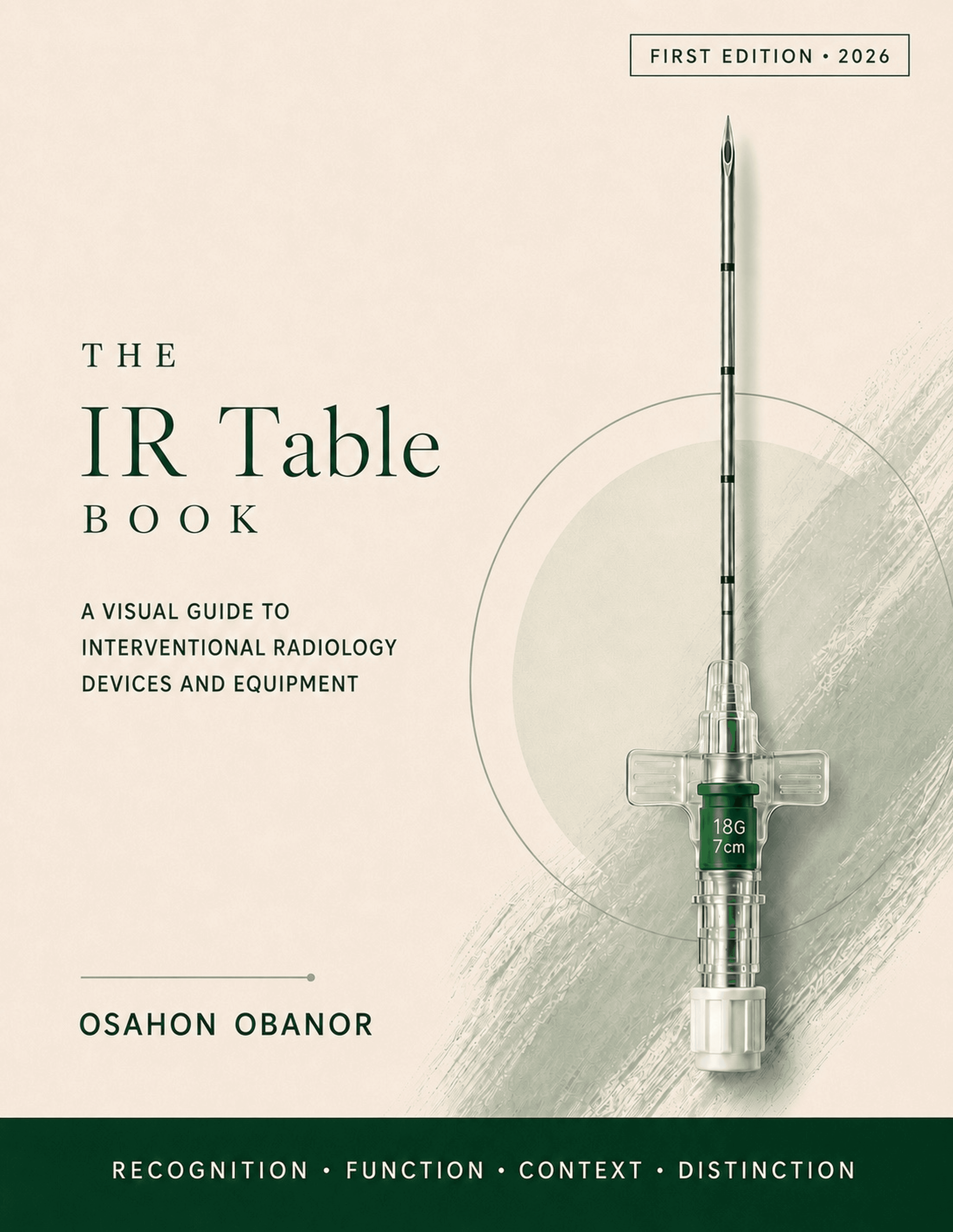
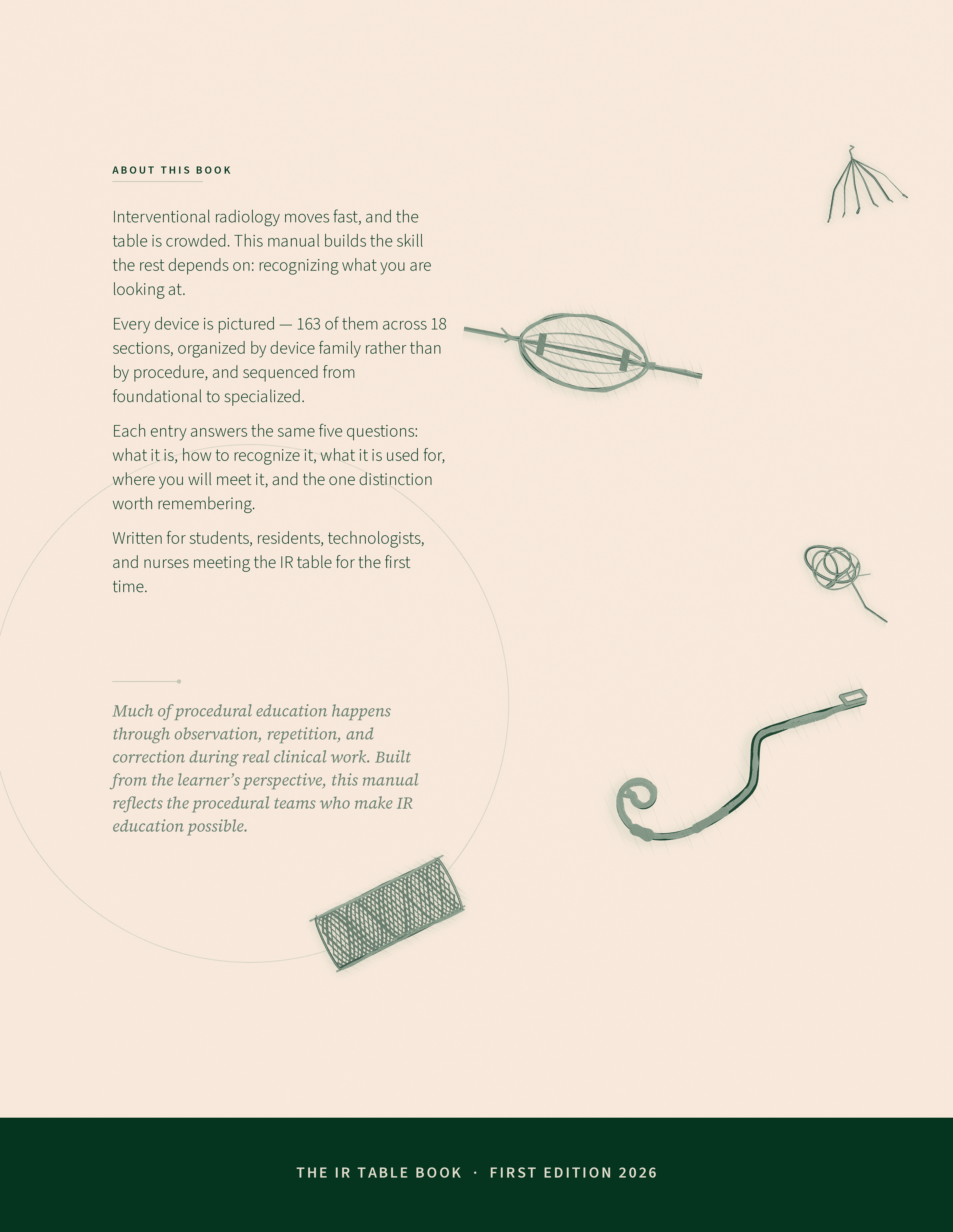
Read the storyFront cover selected, 1 of 2
01Why this exists
You are learning the room while the room is already moving.
Names arrive quickly. A tray opens. Someone asks for a wire, a catheter, a sheath. The work is precise, collaborative, and often generous—but the first time through, the visual language can feel like a private one.
The IR Table Book is an attempt to make that language easier to enter. It gathers the objects learners are likely to meet and gives each one enough shape to become familiar: a silhouette, a connection, a job, a useful distinction. Not to turn observation into expertise, but to give observation somewhere to land.
02How to use it
Use it before a case to orient yourself, during a pause to name what you are seeing, and afterward to connect the object to the work it supported. Bring the question back to your supervising clinician. The conversation is part of the learning.
03A learning progression
A useful reference does more than supply a name. It helps a learner turn what they see into context, and context into a precise question.
Begin with what is actually visible: profile, tip, hub, connection, packaging. Specific details give memory—and conversation—a reliable foothold.
Ask what comes before the device, what it connects to, and which task it supports. Context turns an isolated object into part of the procedure.
Recognition is the beginning, not the conclusion. Describe what you notice, name what remains unclear, and let a supervising clinician help close the gap.
04What we value
Every detail should help a learner see, orient, or ask.
We favor views learners can actually encounter: the profile of a hub, the shape of a tip, a package on the shelf, scale beside a familiar hand. Context is included when it makes those details easier to place—not to turn a field guide into a manual.
That restraint keeps the guide quick to revisit and deliberately limited. It supports the slower work of supervised practice rather than attempting to replace it.
05Care in the archive
Trust includes being clear about where the pictures came from.
The provenance register currently contains 171 active external-source records with 192 source citations representing 181 distinct current URLs. A listed source or organization does not imply endorsement, affiliation, or permission.
Cover artwork is reviewed separately from the device-image provenance register. We keep the distinction visible because a useful resource should also be accountable for its materials.