What am I looking at?
Visual recognition
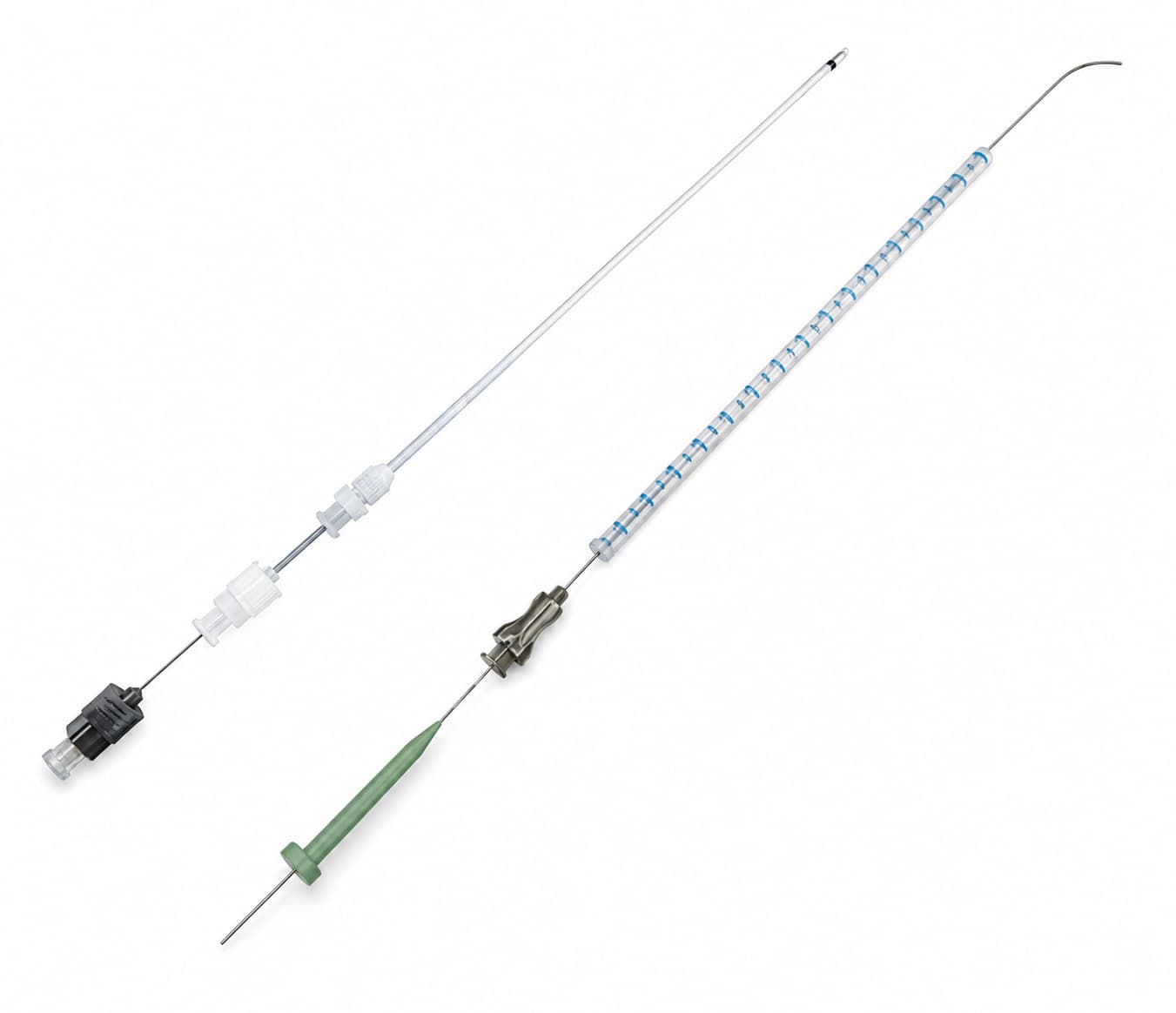
Longer sheath crossing the liver capsule into the ductal system, usually with a radiopaque tip marker.
13-01
Transhepatic working sheath
Three-panel learning framework
What am I looking at?
Longer sheath crossing the liver capsule into the ductal system, usually with a radiopaque tip marker.
What does it do, and where will I see it?
Working sheath seated transhepatically into the bile ducts to maintain a stable channel for cholangiography, dilation, biopsy, stenting, or drain exchange while protecting the parenchymal tract. Typical procedural contexts include biliary obstruction and stricture work, drain up-sizing, and multi-step biliary interventions.
What most clearly distinguishes it from similar devices?
The biliary access sheath is a stable transhepatic working channel for repeated ductal intervention, rather than the definitive drainage catheter that remains for ongoing bile diversion.